The Best Thermostat Installation in Yuma
◆ Save Yourself the Scroll ◆
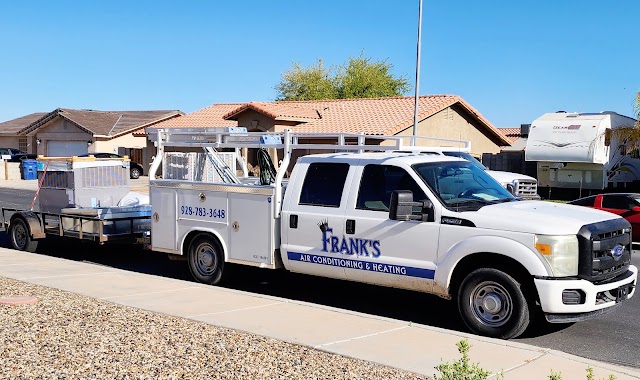
Franks Air Conditioning is Yuma's top pick for thermostat installation, bringing same-day availability, stocked trucks, and an honest wiring assessment that gets smart thermostat installs done right the first visit.
By The Scoop Editorial Team · How we pick · Updated September 2026
The Yuma Thermostat Installation Guide
Thermostat Installation in Yuma
A smart thermostat is the lowest-effort upgrade a Yuma homeowner can make to reclaim control over a brutal cooling season, but only if it is installed and programmed by someone who knows the system it is talking to. We ranked the five shops Yuma trusts most for thermostat installation, from compatibility checks and C-wire assessment through full smart-thermostat setup and remote-access configuration.
Choosing a smart thermostat for a Yuma home
The three platforms Yuma installers work with most often are Nest, Ecobee, and Honeywell Home (now Resideo). Each handles the core job well, and the differences are mostly around ecosystem fit. Nest has the most polished app for remote control and ties tightly into a broad smart-home ecosystem. Ecobee ships with a remote room sensor, which matters in a house where the thermostat location does not reflect where people actually sit. Honeywell Home covers the widest compatibility range, particularly on older or less common systems, and its installer base in the desert Southwest is deep.
For most Yuma homes with a conventional split system, any of the three works well. The decision narrows if you have a heat pump: look for a thermostat rated for heat pump control (O/B terminal support), and confirm your installer has set one up on a heat pump before. Heat pump thermostats handle the reversing valve differently from a standard cool-only or cool-and-heat unit, and a misconfigured device will run the system in heating mode when you want cooling, or vice versa.
The C-wire question and older Yuma homes
Smart thermostats need continuous low-voltage power to run their WiFi, display, and processor. Most draw that power from a dedicated common wire, the C-wire, at the furnace or air handler. Homes built or wired in the last decade usually have one. Older Yuma homes, particularly those built before smart thermostats existed, frequently do not.
Three solutions cover most installs. A power adapter kit (sometimes called a Common Maker or add-a-wire adapter) converts an unused wire in the existing bundle into a functioning C-wire without new runs. Some thermostats, including certain Nest models, use a charge-stealing method that pulls power intermittently from existing wiring without a C-wire, though this approach can occasionally interfere with certain HVAC systems. Running a new wire from the thermostat to the air handler is the cleanest fix when the wiring bundle does not have a spare conductor. A qualified technician will assess which path fits your wiring before any hardware is purchased.
The savings case in a Yuma cooling season
Yuma runs its air conditioning harder and longer than almost any other residential market in the country. From May through September the outdoor temperature regularly exceeds 110 degrees, and many households cool the house around the clock just to keep up. That runtime is where a smart thermostat pays for itself: a well-configured schedule with a setback during low-occupancy hours, even a modest 4 to 6 degree setback, can meaningfully reduce the compressor runtime accumulated over a five-month cooling season.
The key is programming the schedule to fit actual occupancy and not the factory defaults. A thermostat shipped from the Midwest with a standard morning-and-evening schedule does little for a Yuma household where cooling demand is near-constant. Ask your installer to program the schedule at time of install, not leave it on auto-learn for a week. Geofencing, which adjusts the setpoint when everyone leaves the house and starts cooling again before they return, is a useful complement to scheduled setbacks for households with variable routines.
- Set cooling setbacks of 4 to 6 degrees during hours when the house is empty
- Enable pre-cooling: drop the house temperature before peak outdoor heat, not during it
- Use geofencing if your household schedule varies day to day
- Check the runtime reports monthly; a sudden increase in daily runtime is an early signal that the system needs a maintenance visit
The snowbird case: remote control from out of state
A large portion of Yuma's homeowner base spends part of the year elsewhere, and a vacant house in Yuma summer presents a real risk: if the AC fails or is set too high, interior temperatures can reach levels that damage furniture, warp cabinetry, crack paint, and stress the home's structure. A smart thermostat with remote access addresses this directly. From anywhere with a cell signal, an owner can check the current indoor temperature, adjust the setpoint, review how long the system has been running, and receive an alert if the temperature climbs past a set threshold.
The key setup step that often gets skipped on a DIY install is confirming the thermostat is connected to a reliable WiFi network, has a fixed or reserved IP address, and that the remote-access account is configured and tested before the owner leaves town. An installer who includes app setup and a remote connection test as part of the job is worth the premium over one who installs the hardware and hands you the box. For a Yuma snowbird, the thermostat's value is measured almost entirely in what it does when no one is in the house.