The Yuma Emergency Tree Removal Guide
Emergency Tree Removal in Yuma
Yuma's monsoon season delivers haboobs, straight-line winds, and rain bursts that can topple mature trees, shear heavy limbs, and turn a stable yard into a hazard in minutes. A downed tree pressing on a fence, a split mesquite leaning over a roof line, or storm debris blocking a driveway are not situations that wait for a scheduled service call. Fast response, clear communication, and complete site cleanup define what a good emergency tree crew delivers in this market.
How Yuma monsoons and haboobs create tree emergencies
Yuma's monsoon season delivers weather that is largely absent the rest of the year: intense microbursts, straight-line winds ahead of haboob walls, and rare but powerful thunderstorm cells that can topple trees that have stood for decades. Desert trees often have shallow root systems suited to dry conditions, which makes them vulnerable to saturated soil combined with wind loading. A tree that has survived ten dry years without incident can uproot in a single monsoon event when the ground is waterlogged and wind gusts arrive from an unexpected direction.
The situation is compounded by the pace of events. A haboob can travel at highway speed across the desert floor and arrive with almost no warning. Trees that show no signs of stress before the storm may come down during it, and the damage becomes visible only after the wall passes and the visibility clears. That sequence, combined with the frequency of storms during July, August, and early September, means emergency tree calls cluster heavily in a short window. Knowing which crews are prepared to respond quickly during that period is worth knowing before the need arises.
Assessing a hazard tree before it becomes an emergency
Not every tree emergency arrives without warning. A tree that is leaning noticeably after a storm, has a deep crack running through the main trunk, or has lost a major anchor root on one side is a hazard that should be evaluated before the next wind event arrives. The distinction between a tree that needs monitoring and one that needs immediate action is a judgment call that benefits from someone with tree assessment experience rather than a general landscaper. Root exposure, crown asymmetry relative to lean angle, and decay at the base are all factors that affect how urgently a tree should be addressed.
In Yuma's climate, trees under drought stress for extended periods and then hit with rapid soil saturation during monsoon rains are particularly prone to failure. The roots that held through dry conditions may not be structurally sound enough to anchor the tree when the soil loosens. If a tree on a property is leaning in the direction of a structure, vehicle, or neighbor's yard, getting an assessment after the first significant monsoon rain of the season is a reasonable precaution rather than a reactive response after the tree has already come down.
What a complete emergency tree removal should look like
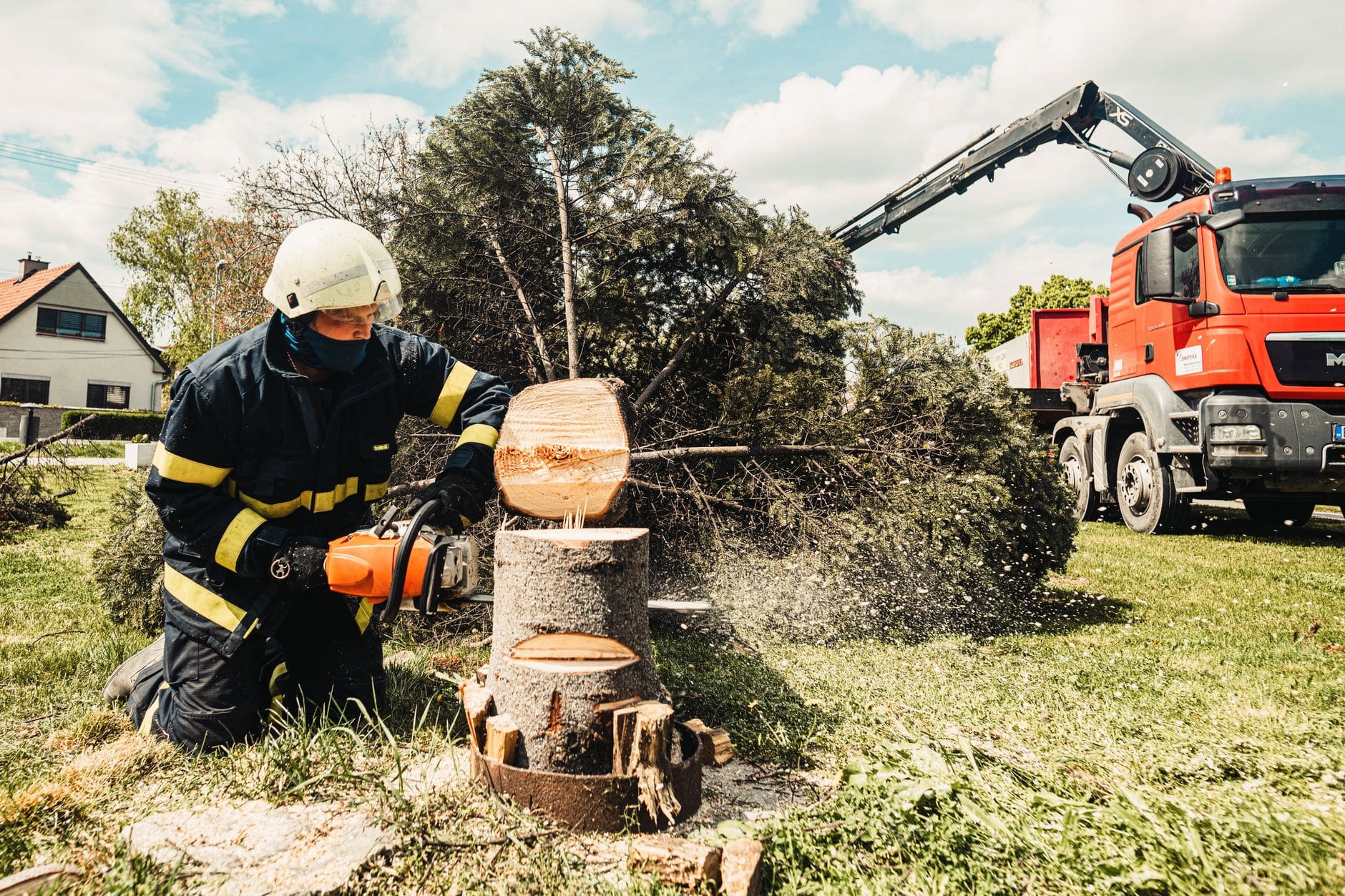
A professional emergency removal does not end when the tree is cut into sections. The complete job includes removing all material from the site, whether that means chipping branches on the spot or hauling logs away, and leaving the ground clear of debris, sawdust, and bark. A cleanup that leaves a pile of rounds on the lawn or brush stacked at the curb is an incomplete job. In Yuma, leaving organic debris on the property or curb without prompt removal can draw a city notice depending on the neighborhood and the scale of the pile.
Communication during the job matters as much as the physical work. When a tree has come down across a fence line or damaged a neighbor's property, the crew's ability to document the work, communicate with both parties, and manage the scene without escalating the situation is part of what distinguishes a professional operation from a crew that just owns a chainsaw. After the material is cleared, a good crew will also walk the property for secondary hazards: hanging limbs from other trees that were stressed by the same storm, cracked branches still in the canopy, or root damage to nearby trees that may not be apparent until the next significant wind event.